
ADVOCACY & POLICY UPDATE: Governor Vetoes Statewide Micromobility Legislation
Key takeaway: Current Florida e-bike law remains in effect. SB 382 was vetoed and did not become law.
On June 25, 2026, Governor Ron DeSantis vetoed Senate Bill 382, a bill addressing electric bicycles, micromobility devices, pedestrian safety, and crash reporting. The legislation had previously passed both chambers of the Florida Legislature unanimously. Because of this executive veto, the proposed changes will not become law, and current Florida e-bike statutes remain in effect.
Understanding the Vetoed Provisions
The legislation was designed to establish a uniform statewide framework to protect vulnerable path users and improve data collection:
Pedestrian Safety Buffers: The bill would have prohibited operating an electric bicycle at a speed greater than 10 mph when within 50 feet of a pedestrian.
Task Force Creation: It sought to establish a Micromobility Device Safety Task Force to analyze regulatory structures and provide evidence-based policy recommendations.
Uniform Crash Reporting: The bill aimed to streamline data collection by requiring law enforcement agencies to maintain specific tracking records of crashes involving micromobility devices.
In his veto message, Governor DeSantis noted that a 50-foot pedestrian buffer would establish a standard that is difficult for a person on a bicycle to measure while operating. He also expressed concern that enforcing the speed restriction could lead to expanded speed detection or surveillance devices, and objected to creating a regulatory task force without a specified sunset date.
The Existing Legal Framework for Florida Riders
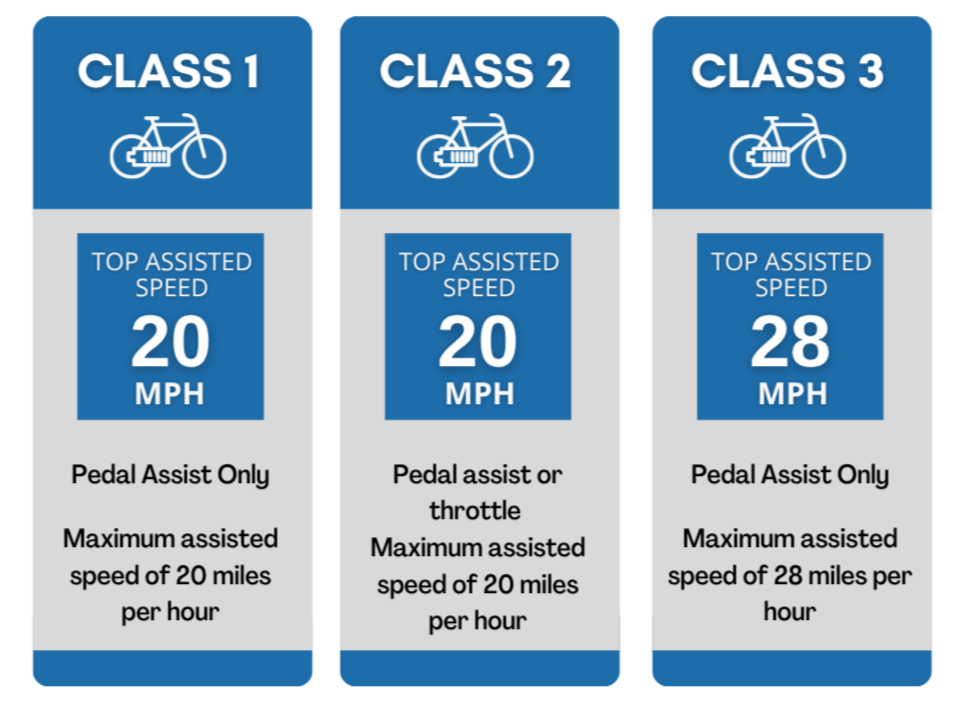
For people on bicycles and community partners across the state, the legal status quo remains unchanged. Florida law already recognizes a clear three-class classification system for electric bicycles under section 316.003(23), Florida Statutes:
Important Distinction: To be legally classified as an electric bicycle in Florida, a device must possess fully operable pedals and an electric motor of less than 750 watts.
Many high-powered devices generating public concern are actually electric motorcycles or electric mopeds that fall outside of this legal definition.
Under section 316.20655, Florida Statutes, legal electric bicycles are afforded the same rights and responsibilities as traditional bicycles. Every person on an electric bicycle is expected to obey traffic signals, stop signs, and right-of-way rules.
Local Action and the Path Forward
Because the state framework leaves specific facility rules open to local modification, local governments, park agencies, and land managers retain the authority to adopt additional ordinances governing sidewalks and shared-use paths.
The safety challenges that prompted this bill have not disappeared. Human lives are on the line, and crashes are entirely preventable when policy, infrastructure, and education work in tandem.
Our organization is expanding our reach to build a robust statewide coalition capable of advancing systemic safety solutions. We will continue collaborating with Metropolitan Planning Organizations (MPOs), local governments, public agencies, and corporate partners to promote predictable infrastructure, clear public education, and accurate device classification.
We are your voice for safer bicycling in Florida—because we deserve better.
Are you interested in learning how your local bicycle club or community organization can partner with the Florida Bicycle Association to advocate for safer, low-stress infrastructure in your municipality?
