
ELECTRIC MOBILITY & E-BIKE RESOURCES
We have gathered a collection of resources to help you understand e-bike laws, safety, best-practices, and buying considerations for a safer, low-stress ride.
Click on the button below to go to the section you want to learn about first
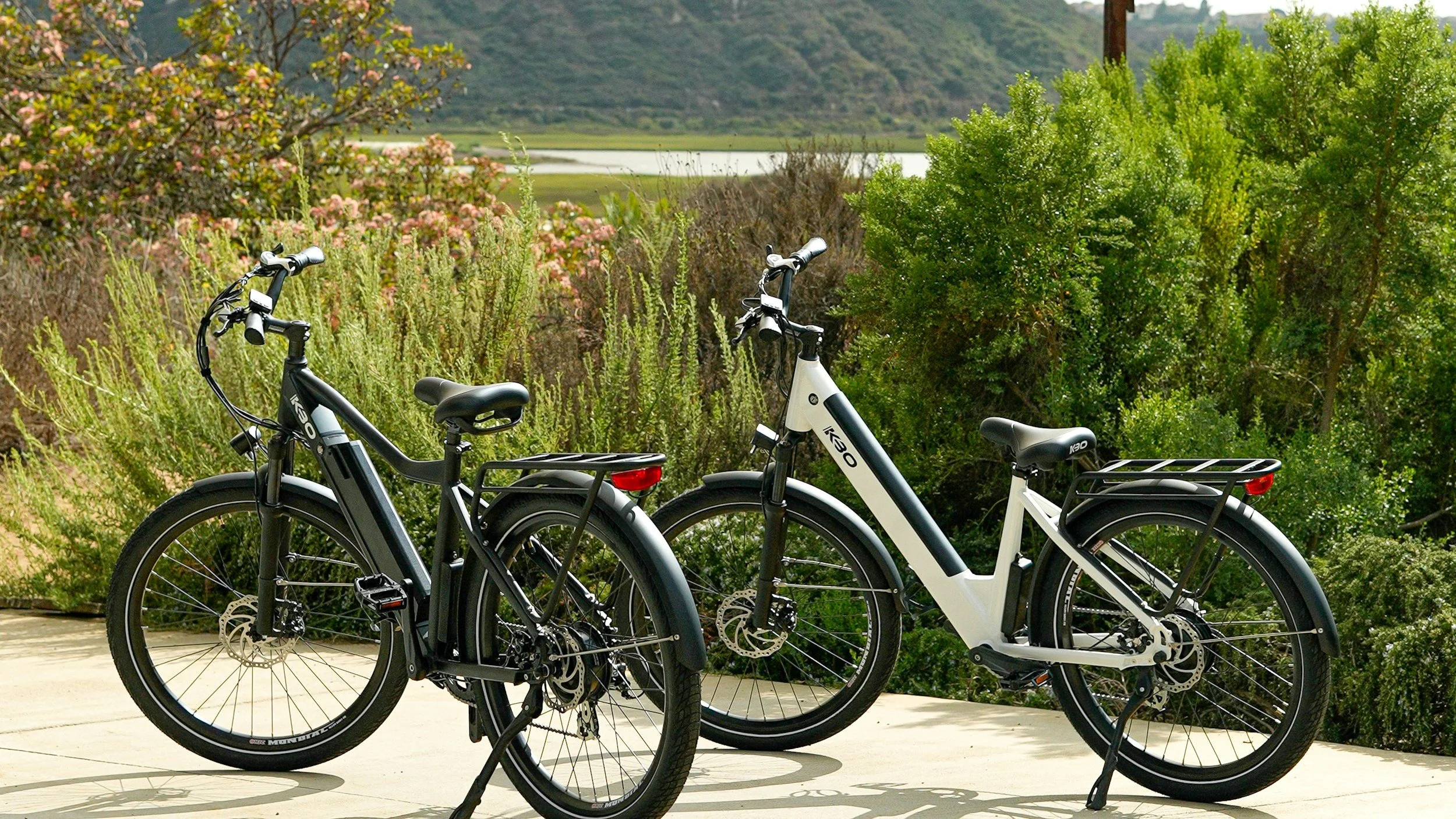
NAVIGATING THE FUTURE OF ELECTRIC MOBILITY IN FLORIDA
SECTION 1: FLORIDA E-BIKE LAW AND LEGISLATION
UNDERSTANDING THE LAW
As electric mobility grows, understanding the legal framework ensures everyone can share the road safely and predictably. Florida law explicitly defines where and how electric bicycles can be operated. Staying informed about state statutes and local ordinances protects riders and helps prevent a conflict or a crash on our shared networks.
WHAT IS AN E-BIKE?
A Legal E-bike in Florida must have:
Two or three wheels
Fully operable pedals
A seat or saddle
An electric motor of less than 750 watts
And fit into one of the 3 classes (see graphic)
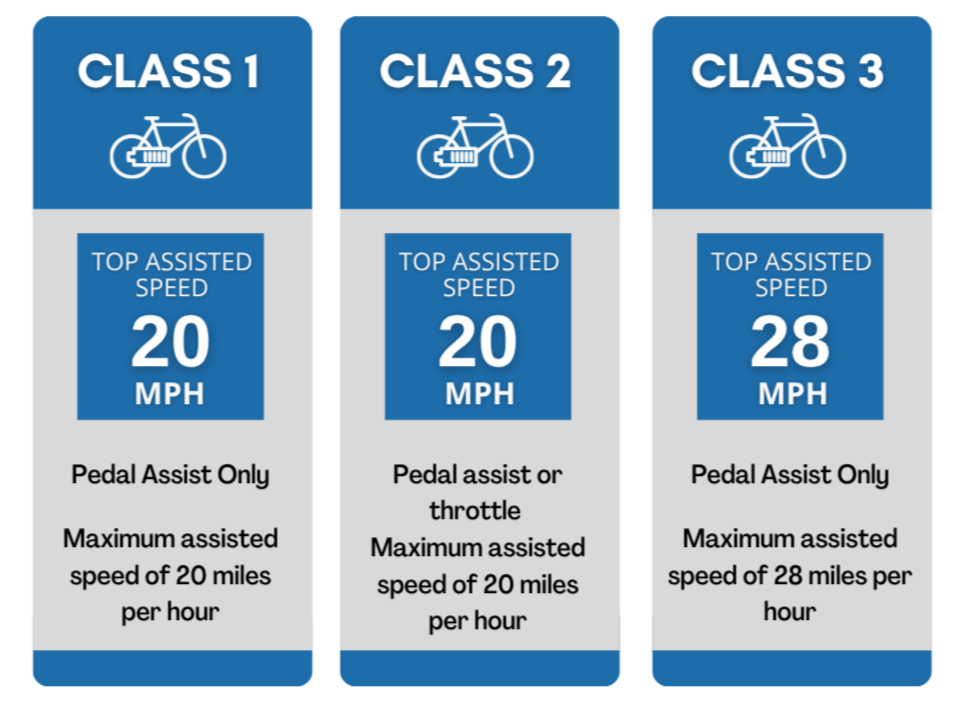
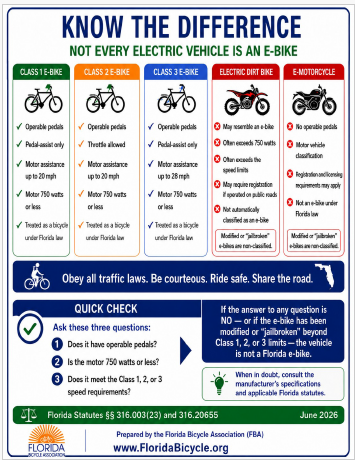
Under Florida law, a legal e-bike must have fully operable pedals and an electric motor of less than 750 watts. It must also fit neatly into one of three specific tiers:
- Class 1: Pedal assist only, stopping assistance at 20 mph.
- Class 2: Throttle and pedal assist allowed, stopping assistance at 20 mph.
- Class 3: Pedal assist only, stopping assistance at 28 mph.
High-powered electric dirt bikes, e-motorcycles, and vehicles motors greater than 750 watts are completely outside this legal framework.
This distinction matters. When high-speed, out-of-class machines are operated on sidewalks, trails, and shared-use paths, they create safety hazards and widespread confusion. They jeopardize spaces intentionally designed for families, children, commuters, older adults, people walking, and people on bicycles. This confusion frequently causes legal e-bikes and traditional bicycles to be unfairly maligned as a neighborhood problem.
There are distinct boundaries between a bicycle, an e-bike, and a high-speed motorized vehicle.
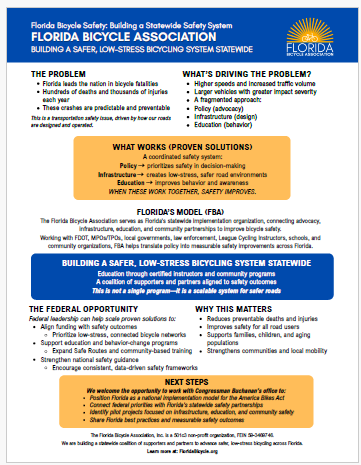
Learn about the FBA’s ‘Statewide Safety System Approach’
Not specific to e-bikes, but a handy one page guide to the FBA’s approach to developing a statewide safety ecosystem.
SECTION 2: SAFETY, EDUCATION, & BEST PRACTICES
RIDING SAFELY AND PREVENTING CRASHES
Because electric bicycles can maintain higher speeds more easily than traditional bicycles, predictable riding is especially important. Many bicycle and e-bike crashes involve a combination of human error, roadway design, traffic behavior, and infrastructure gaps. Structured rider education, motorist awareness, proper equipment, and safer street design all help reduce risk and support safer interactions between bicyclists, drivers, and pedestrians.
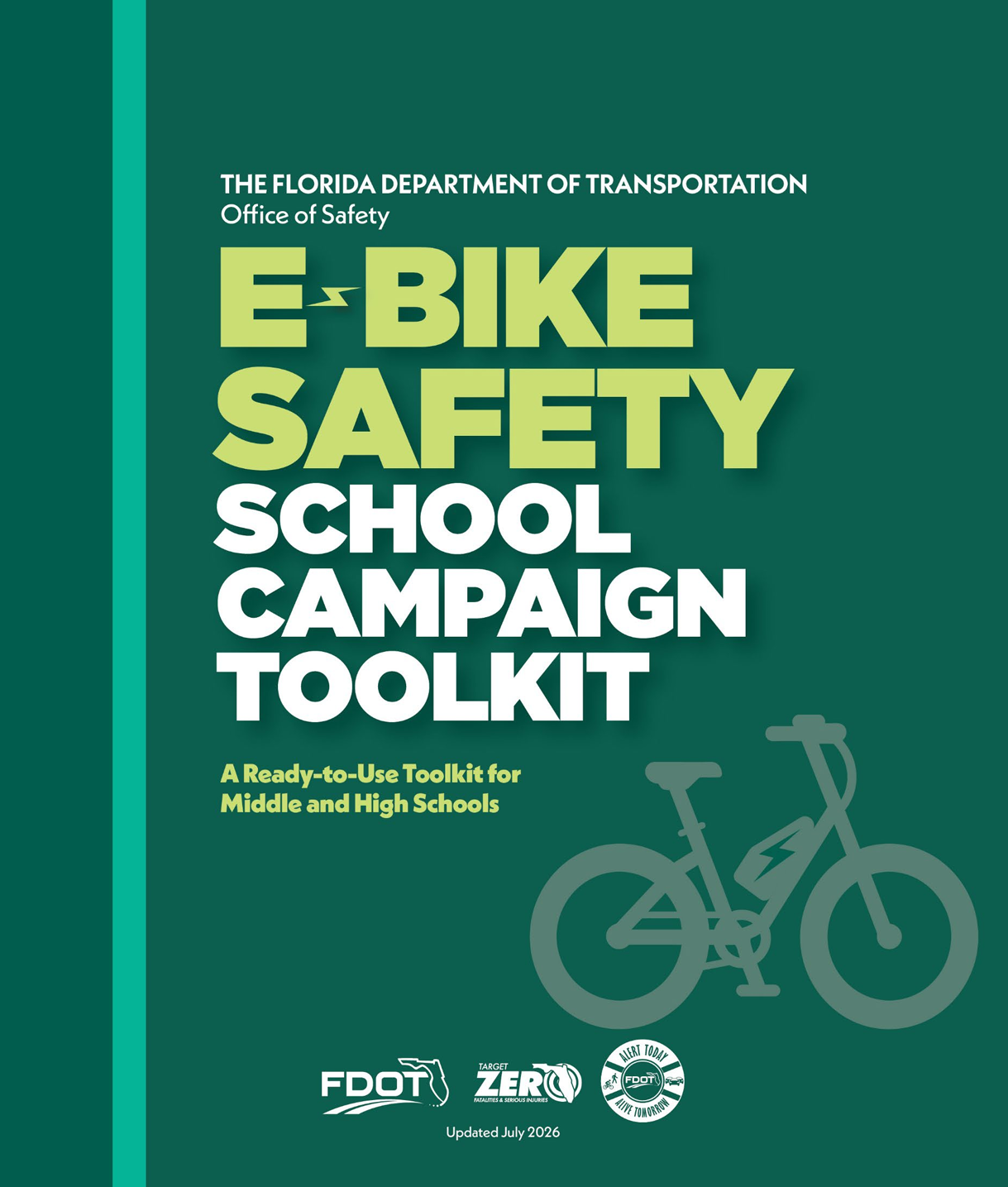
FDOT has created a toolkit intended for middle and high schools to conduct an e-bike campaign. The toolkit includes brochures, posters, presentations, and social media posts, including a guide on How to Use these materials.
Click here or on the image above to see the full toolkit page
Teen E-Bike Safety Training
A comprehensive training for young drivers and pre-driving teens. Students will learn the skills teens need for safe and responsible e-biking—skills that will carry over into safer driving.

E-Bike Smart
The E-Bike Smart course from PeopleForBikes and the League of American Bicyclists shares the basics of maintaining your e-bike, handling and charging your e-bike battery, and riding safely while out on the road or trail. Whether you’re new to riding or just need a refresher

SECTION 3: BUYING GUIDE AND FUTURE TRENDS
SMART PURCHASING AND THE FUTURE OF MOBILITY
Choosing the right electric bicycle means matching the bike to how and where it will be used, whether for commuting, family transportation, or recreational riding. Buyers should consider battery and charger safety, preferably UL-certified equipment, motor power and legal classification, braking performance, weight, and the riding environment.
THE FLORIDA E-BIKE BUYER’S GUIDE
Electric bicycles, or e-bikes, are transforming how people travel across the Sunshine State. Whether commuting to work, enjoying regional trail systems, or running local errands, e-bikes make active transportation more accessible to everyone. The Florida Bicycle Association is committed to advancing safer, low-stress bicycling by helping people on bicycles understand their options, choose compliant equipment, and follow state laws.
UNDERSTANDING THE THREE E-BIKE CLASSES
Florida law recognizes three distinct classes of electric bicycles. To be considered a legal e-bike under Florida Statute 316.003, the vehicle must be equipped with fully operable pedals and an electric motor of less than 750 watts.
CLASS 1: The electric motor provides assistance only when the person on a bicycle is pedaling. The motor ceases to provide assistance once the bicycle reaches a speed of 20 miles per hour.
CLASS 2: The electric motor can propel the bicycle exclusively without pedaling, typically via a throttle. The motor ceases to provide assistance once the bicycle reaches a speed of 20 miles per hour.
CLASS 3: The electric motor provides assistance only when the person on a bicycle is pedaling. The motor ceases to provide assistance once the bicycle reaches a speed of 28 miles per hour. Class 3 e-bikes must also be equipped with a speedometer.
COMPLIANCE AND BUYER CHECKLIST
When purchasing an e-bike, ensuring that the manufacturer adheres to state equipment standards protects your investment and ensures your safety on public infrastructure.
Verify the Manufacturer’s Label: Florida law requires manufacturers and distributors to permanently affix a prominent label to the e-bike. This label must clearly state the classification number, the top assisted speed, and the motor wattage. Avoid buying unlabeled or modified devices.
Understand the Risks of Modification: Tampering with or modifying an e-bike to increase its factory speed capability without replacing the classification label violates state law. Out-of-class vehicles that exceed 750 watts or lack functional pedals are legally classified as motor vehicles. Operating an unregistered motor vehicle on a bicycle path or sidewalk increases the risk of law enforcement citations and severe liability if a motorist or another trail user causes a crash.
Check Local Regulations: By default, people on legal e-bikes are afforded all the rights and privileges, and are subject to all the duties, of a standard bicycle rider. You may operate an e-bike where traditional bicycles are allowed, including streets, roadways, shoulders, bike lanes, and multiuse paths. However, local municipalities hold the authority to restrict e-bike usage on specific paths, trail networks, or sidewalk areas within their jurisdiction.
SAFETY EQUIPMENT AND RESPONSIBLE RIDING
At the Florida Bicycle Association, safety is the foundation of our work. Proper behavior and high-quality safety gear change how we interact with our transportation network.
Helmet Requirements: Florida law mandates that any person under the age of 16 operating or riding as a passenger on any bicycle, including an e-bike, must wear a properly fitted helmet. Florida law does not require adults to wear a helmet on any class of e-bike, but the association strongly recommends one, especially at Class 3 speeds. The association recommends that all people on bicycles wear a helmet that sits level on the head, with straps forming a "V" under the ears and buckled snugly.
Yielding and Path Etiquette: Shared space requires a respectful pace. When operating on sidewalks or shared-use paths, always slow down to a safe speed when approaching pedestrians. State rules require operators to yield the right-of-way and give an audible warning, such as a bell or a verbal signal, before passing any pedestrian.
Nighttime Visibility: If you plan to ride your e-bike after dark, ensure it is equipped with a front lamp emitting a white light visible from a distance of at least 500 feet to the front, and a red reflector on the rear. High-visibility clothing further ensures that a motorist can see you clearly from a safe distance.
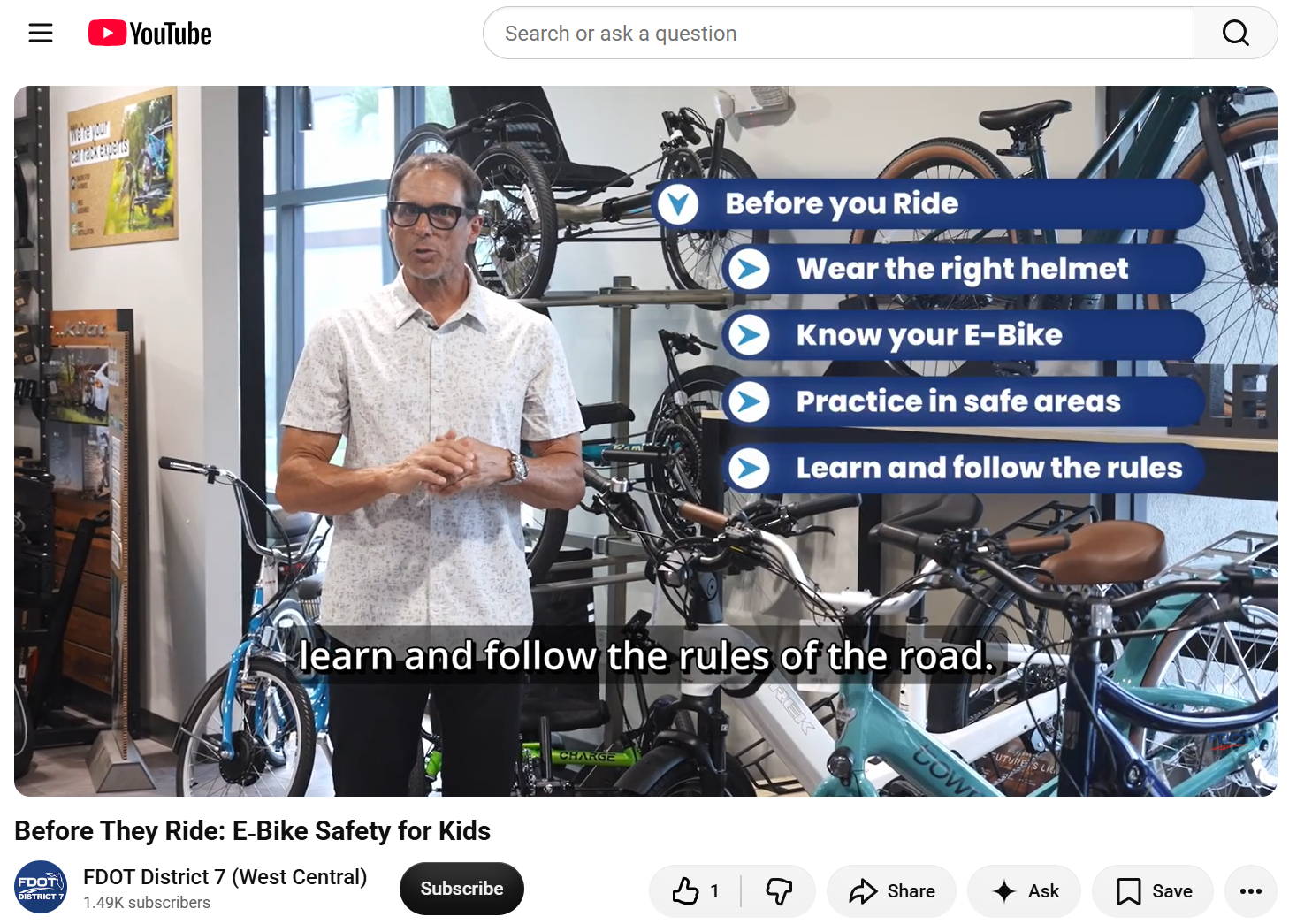
E-BIKE SAFETY VIDEO: Before They Ride: E‑Bike Safety for Kids
QUICK FACT: E-Bike Power Limits in Florida
You may often hear that an e-bike must be "750 watts or less" to be legal in Florida.
The actual law is slightly more specific.
Florida Statute § 316.003(23) officially defines a legal electric bicycle in Florida as having:
"...an electric motor of less than 750 watts."
Why the difference? While "750W or less" is the common shorthand used across the industry, we prefer to quote the law exactly as it appears in the state statutes.
What this means for you: Don't sweat the phrasing—standard 750W Class 1, 2, and 3 e-bikes are completely legal to ride in Florida. Just look for the official class sticker on the frame!
WHY UL 2849' CERTIFICATION MATTERS
Unlike standard bicycles, e-bikes rely on complex electrical drive trains, battery packs, and charger systems. Underwriters Laboratories developed the UL 2849 standard to rigorously evaluate these components. Certification ensures that the battery and electrical system have been tested to minimize risks, such as electrical fires or thermal failures.
When electrical systems fail, the resulting battery fires can cause significant property damage or severe injury. By choosing an e-bike that is explicitly certified to the UL 2849 standard, people on bicycles protect themselves, their families, and their communities.
Local bike shop owners tell us this is a key differentiator that separates them from many online retailers selling E-bikes. So when thinking about purchasing an E-bike, stop by your local bike shop and ask them if the model carries the UL 2849 certification. It is a simple step that advances our shared goal of a safer, low-stress riding environment.

E-BIKE GUIDES - FREE DOWNLOADS
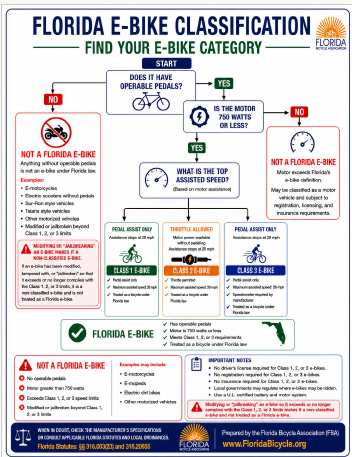
The FBA’s Florida E-Bike Classification Graphic
An easy to understand workflow to help you determine what is or is not an e-bike.
The FBA’s ‘Know the Difference’ Graphic
A simple guide to understanding the difference between what is a legal e-bike and what is out of compliance with current law
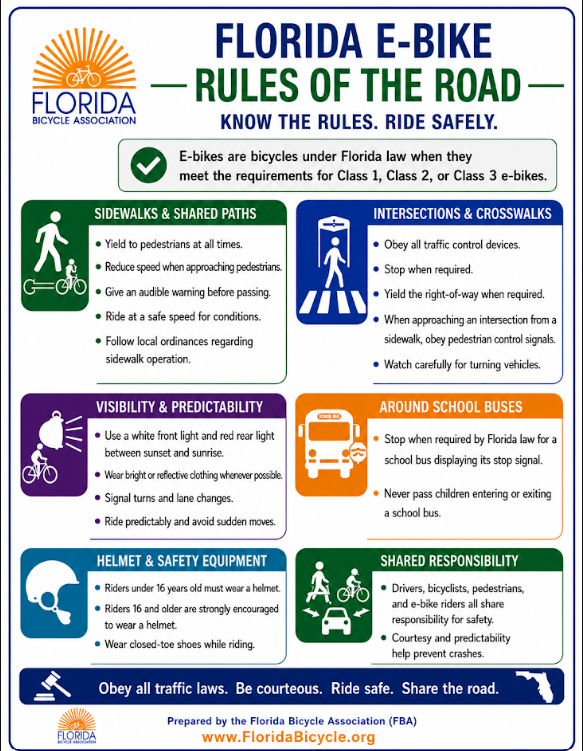
The FBA’s E-BIKE Rules of the Road Graphic
Be safe, know the rules of the road before you ride.

The FBA’s Florida Bicycle Rules for Riders
Be safe, know the rules of the road before you ride.

The FBA’s Florida Bicycle Friendly Driver
Tips for being a Bicycle Friendly Driver
📄 English: Download PNG
The FBA’s ABC Checklist
Essential Pre-Ride Tips for a safe ride
The FBA’s Bicycle Rules Drivers Should Know
Essential Tips for Motorists in Florida
SECTION 4: E-BIKE DOWNLOADS
JOIN THE COALITION FOR SAFER STREETS
The Florida Bicycle Association is building a statewide coalition of individual supporters, community groups, and corporate partners to advance safer infrastructure and education.
We deserve better, more accessible networks.
Follow Us on Social Media